
Introduction
AI Story Writer is a web-based creative writing tool that generates long-form fiction from a core idea, genre selection, and credit-based usage. The public pages emphasize fast draft creation-multiple versions per run-and auxiliary generators for titles, plots, prompts, and short fiction. Authors evaluating AI-assisted drafting should confirm commercial-use terms, credit math, and export formats on the live site before relying on it for published work.
Key Features
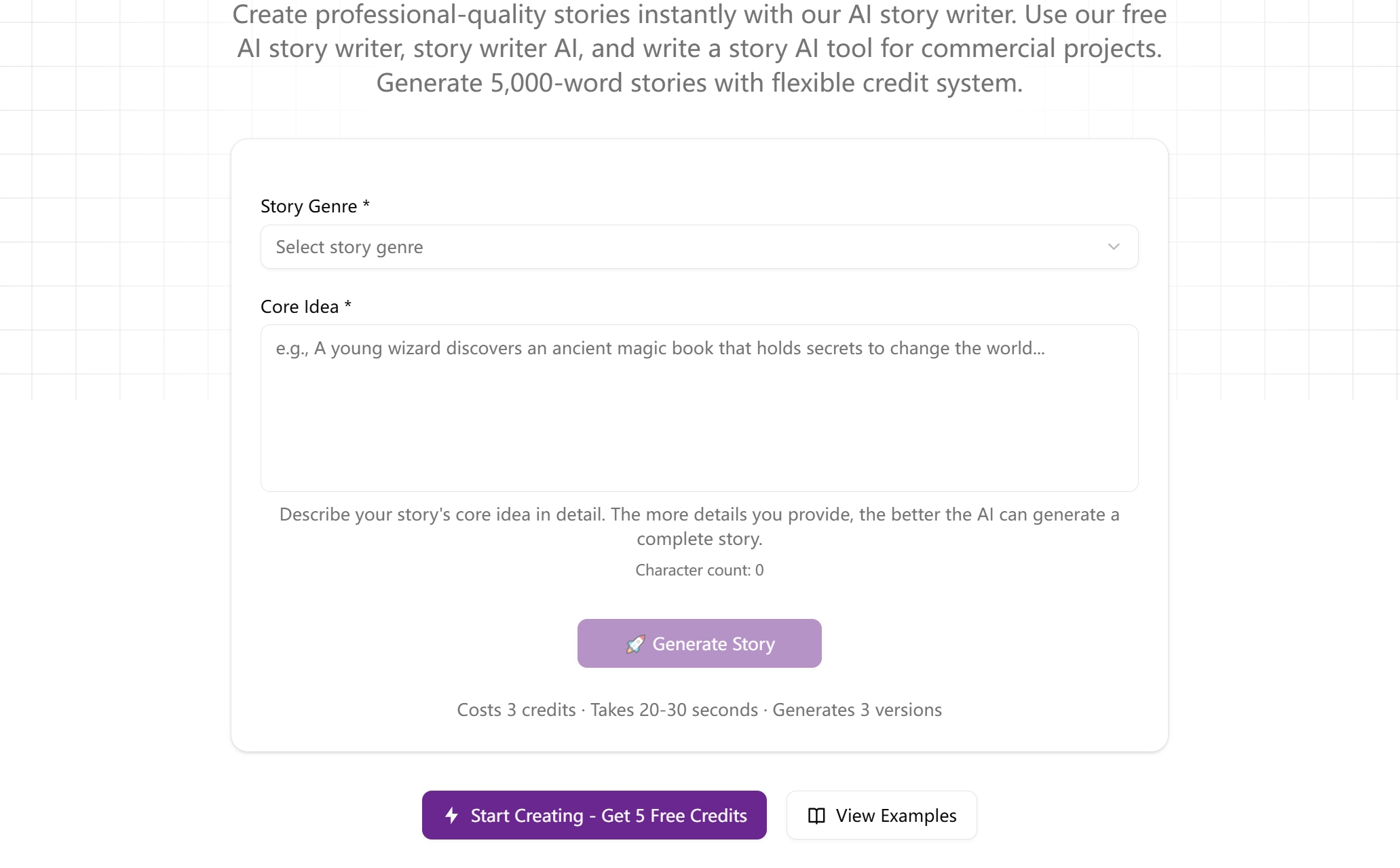
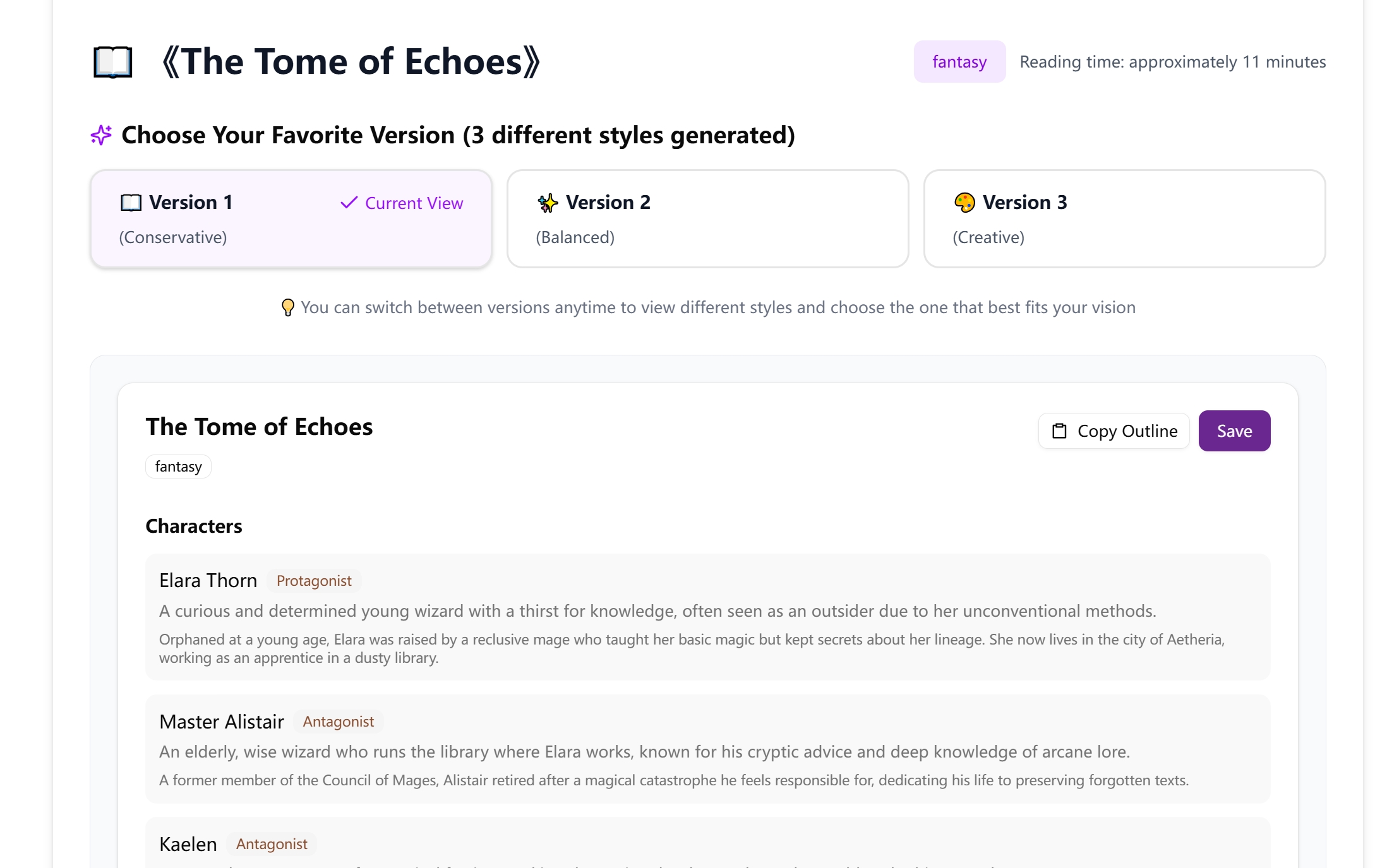
- Long-form story generation: Enter a detailed core idea and genre; a full story run costs 3 credits, takes about 20-30 seconds, and produces three versions according to on-page copy.
- Credit-based access: Pay-as-you-go credits with optional monthly or annual subscription tiers; marketing mentions up to 5,000 words of content per credit for long-form output.
- Multi-genre support: Fantasy, sci-fi, romance, mystery, horror, and other genres are listed as supported styles.
- Quick story tools: Separate generators for ideas, titles, plots, character names, prompts, short stories, and character backgrounds-many priced at 1 credit per use on the homepage.
- Editing and export: Feature lists mention advanced editing tools, character customization, and export to Word, PDF, or TXT.
- No-filter mode: The site references an "ai story writer no filter" mode for creative freedom alongside standard professional output positioning.
Use Cases
Fiction writers facing blank-page delays might use the main generator to produce draft chapters or complete narratives from a premise, then edit manually. The Story Idea Generator and Story Prompt Generator suit daily practice or brainstorming when you need several concepts quickly.
Game masters and roleplay enthusiasts may use the Background Story Generator and Story Name Generator for character depth. Short Story Generator copy targets competitions or publication practice with 500-1,500 word self-contained pieces. Teams needing subscription-scale volume might compare annual plans that advertise hundreds of generations per year.
Pricing
The pricing page describes flexible options: start free with credits (meta mentions 10 credits; signup promos also reference 20 free credits and enough for about six complete stories at 3 credits each). One-time credit packs start from $2.99 according to meta description, with no subscription required for credit-only use.
Annual plans visible include Hobby Annual at $44.99/year (240 credits / ~240 story generations per year), Creator Annual with 600 generations and priority speed plus expand chapter details, and Pro Annual with 1,800 generations, priority support, early features, and batch export. Monthly credit equivalents are described as Hobby 20, Creator 50, and Pro 150 credits per month. First-time visitors can generate one story without sign-in; credits apply after that trial.
User Experience and Support
The flow centers on Start Generating, genre and core-idea fields, and a showcase/examples area. Sign-up is positioned as simple, with no credit card required for the advertised free credits. Navigation includes Features, Pricing, Showcase, Blog, and Story Generators.
Pro-tier annual copy mentions priority support response; broader help center or documentation depth was not detailed on the fetched pages. Privacy Policy and Terms of Service links appear in the footer-review those for content rights and commercial use before publishing generated text.
Technical Details
The product is presented as a browser-accessible AI Story Writer app usable on any device, without API, SDK, or self-hosted deployment details on the fetched pages. Generation timing and version counts are stated (3 versions per main story run); underlying model providers are not named publicly in the evidence collected.
Pros and Cons
Pros
- Multiple entry points: anonymous one-story trial, free signup credits, and pay-as-you-go packs.
- Three variants per main generation may speed comparison without rerunning from scratch.
- Suite of 1-credit micro-tools for ideas, titles, plots, and names beyond full stories.
- Annual tiers scale for high-volume creators with optional priority speed and chapter expansion on higher plans.
- Export formats (Word, PDF, TXT) are advertised for finished drafts.
Cons
- Credit messaging varies slightly across pages (10 vs 20 free credits); confirm current signup offer at registration.
- "Commercial use" is claimed in marketing; licensing should be verified in terms, not assumed.
- Priority features and support are tied to higher subscriptions.
- No visible technical documentation for integrations or automated pipelines.
FAQ
What does AI Story Writer do?
It generates fiction from your genre and core idea, with long-form runs producing multiple complete versions in minutes using a credit system.
How many credits does one full story cost?
The homepage states 3 credits per main story generation, with three versions returned in about 20-30 seconds.
Can I try it without paying?
Yes-first-time visitors can generate one story free without sign-in; after that, credits or a plan are required. Signup promos also advertise free credits without a credit card.
What genres are supported?
The site lists fantasy, sci-fi, romance, mystery, horror, and more, with genre selection in the main form.
What is the difference between credits and subscriptions?
Credits can be purchased flexibly without monthly commitment; subscriptions (monthly or annual) bundle larger credit pools and features such as priority generation, chapter expansion, or batch export on higher tiers.
Are there tools besides full stories?
Yes-quick tools include idea, title, plot, name, prompt, short story, and background generators, mostly at 1 credit each per homepage descriptions.
Can I export my work?
Marketing copy mentions export in Word, PDF, or TXT formats; confirm available formats in the app after generation.
Conclusion
AI Story Writer at story-generator.net targets authors and creators who want AI-drafted fiction, outlines, and brainstorming utilities under a credit or subscription model. It fits evaluators who will test the free story path, map credits to their output volume, and read terms before treating generated prose as publication-ready.