

Introduction
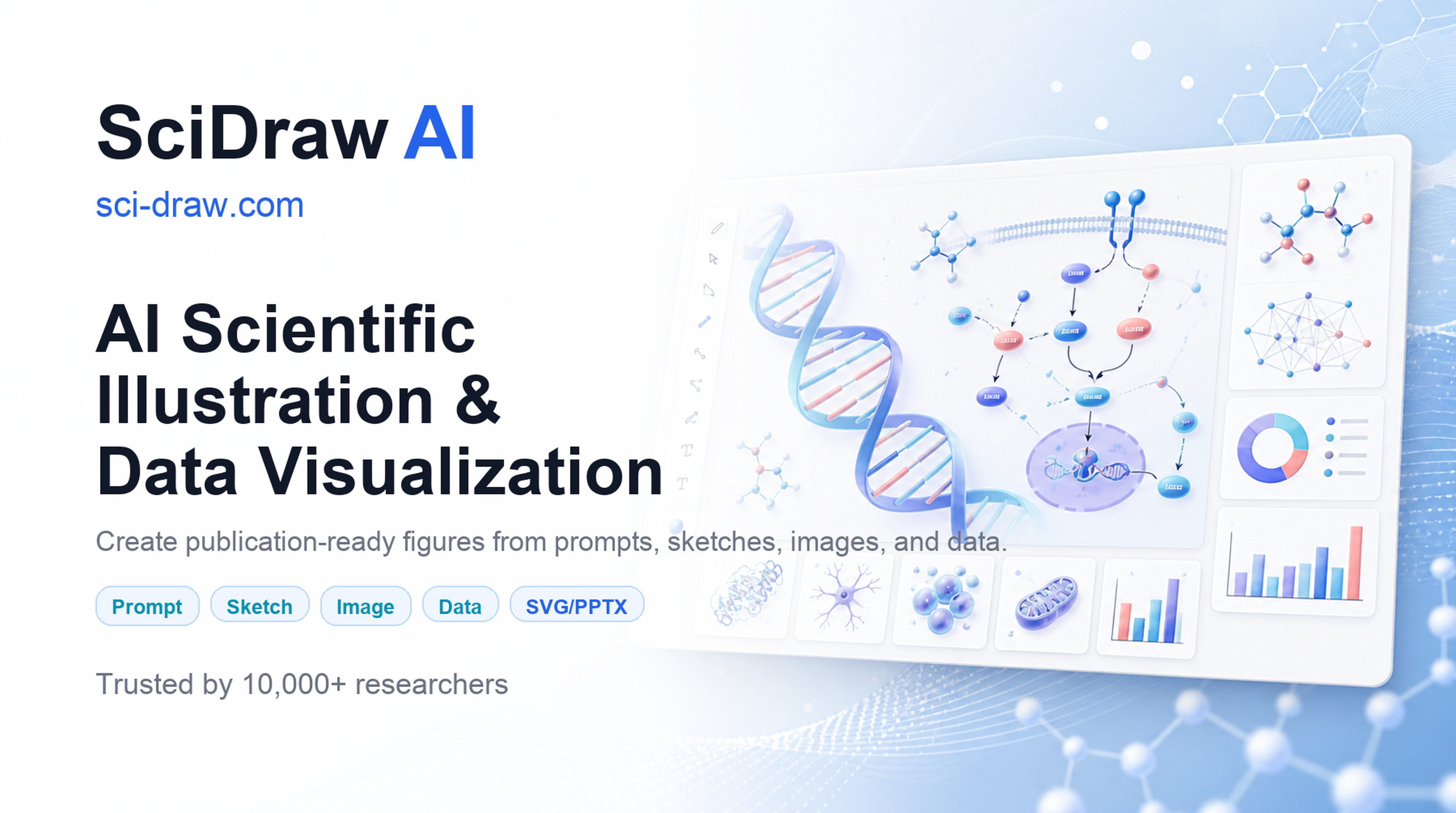
SciDraw AI is an AI-powered tool designed for creating scientific illustrations, diagrams, and data visualizations. The platform targets researchers, students, and educators who need publication-ready figures for academic papers, theses, posters, and teaching materials. With three operating modes and smart chart generation capabilities, SciDraw AI aims to streamline the creation of professional scientific visuals with export options in SVG and PDF formats.
Key Features
- AI-Powered Scientific Illustration: Generate publication-ready scientific figures using artificial intelligence
- Three Operating Modes: Multiple approaches to creating visuals for different user needs and skill levels
- Smart Chart Generation: Automated data visualization tools for creating scientific charts
- Diagram Creation: Build scientific diagrams suitable for academic publications
- SVG Export: Vector format output for scalable, high-quality printing
- PDF Export: Standard academic format for easy integration with papers and presentations
- Free Trial: Evaluation period available before commitment
Use Cases
SciDraw AI serves academic researchers preparing figures for journal submissions. Publication-ready illustrations are essential for communicating complex scientific concepts, and the AI-assisted workflow may reduce the time required to produce professional-quality visuals.
Graduate students working on theses and dissertations benefit from tools that help create consistent, high-quality figures throughout their documents. The export options in standard academic formats simplify integration with LaTeX and word processing workflows.
Educators creating teaching materials for lectures and presentations can use the platform to generate diagrams and charts that explain scientific concepts clearly. The multiple modes may accommodate different levels of customization needed for classroom materials.
Conference presenters preparing posters find value in tools that produce print-ready vector graphics. SVG and PDF exports maintain quality at large poster sizes where raster images might pixelate.
Pricing
SciDraw AI offers a free trial for evaluation. Specific pricing tiers and subscription details are not prominently displayed on the main landing page. Users interested in continued access should explore the platform during the trial period to understand feature limitations and pricing structure.
User Experience and Support
The available information suggests a focus on streamlined figure creation, though detailed documentation about user interface design or learning resources is not visible in the extracted content. The three-mode system implies flexibility for different user workflows-from quick generation to more controlled creation processes.
Support channels and documentation depth should be verified during the free trial. Academic users typically require responsive support when preparing time-sensitive submissions.
Technical Details
SciDraw AI operates as a web-based platform accessible through standard browsers. Key technical specifications include:
- Export Formats: SVG (Scalable Vector Graphics) and PDF for professional publication workflows
- AI Generation: Machine learning models trained on scientific illustration conventions
- Chart Generation: Automated data-to-visualization pipeline
The platform appears designed for integration with standard academic workflows, prioritizing export formats commonly required by journals and conferences.
Pros and Cons
Pros
- Specifically designed for scientific figure creation
- Vector export formats (SVG/PDF) maintain quality at any size
- Multiple operating modes accommodate different user preferences
- Free trial allows evaluation before purchase
- AI assistance potentially reduces creation time for complex figures
Cons
- Limited publicly available information about features and capabilities
- Pricing structure not transparently displayed
- Unclear how the AI handles domain-specific scientific accuracy
- Support and documentation depth unknown without trial access
- No visible information about collaboration or team features
- Limited evidence of integration with reference management or data tools
FAQ
What is SciDraw AI?
SciDraw AI is an artificial intelligence platform for creating scientific illustrations, diagrams, and data charts. It targets researchers, students, and educators who need publication-ready figures for academic work including papers, theses, posters, and teaching materials.
What export formats does SciDraw AI support?
The platform exports in SVG (Scalable Vector Graphics) and PDF formats. These vector formats maintain quality at any resolution, making them suitable for both digital submission and large-format printing such as conference posters.
Is there a free trial?
Yes. SciDraw AI offers a free trial period for evaluation. Users should take advantage of this to test the platform's capabilities with their specific scientific visualization needs before committing to a subscription.
What are the three operating modes?
The platform mentions three modes for creating visuals, though specific details about each mode's functionality and use case are not publicly documented. Prospective users should explore these during the trial to understand which mode suits their workflow.
Can SciDraw AI handle specialized scientific domains?
The available information does not specify which scientific fields the AI models are trained on or how domain-specific conventions are handled. Users in specialized fields (molecular biology, astrophysics, geology, etc.) should verify output quality during the trial period.
Is SciDraw AI suitable for journal publication?
The platform advertises publication-ready output, suggesting compliance with common journal figure requirements. However, specific journal guidelines vary, and users should verify that exported figures meet their target publication's technical specifications.
Conclusion
SciDraw AI addresses a genuine need in academic workflows: creating professional scientific figures efficiently. The focus on vector export formats and publication-ready output suggests understanding of researcher requirements.
However, the limited publicly available information makes evaluation difficult without trial access. Prospective users should thoroughly test the platform's capabilities with their specific visualization needs, paying particular attention to scientific accuracy in their domain and compatibility with their publication workflows.
The free trial removes risk from initial exploration. Visit sci-draw.com to evaluate whether the AI-assisted workflow meaningfully improves figure creation efficiency compared to traditional tools like Adobe Illustrator, BioRender, or open-source alternatives.