
Introduction
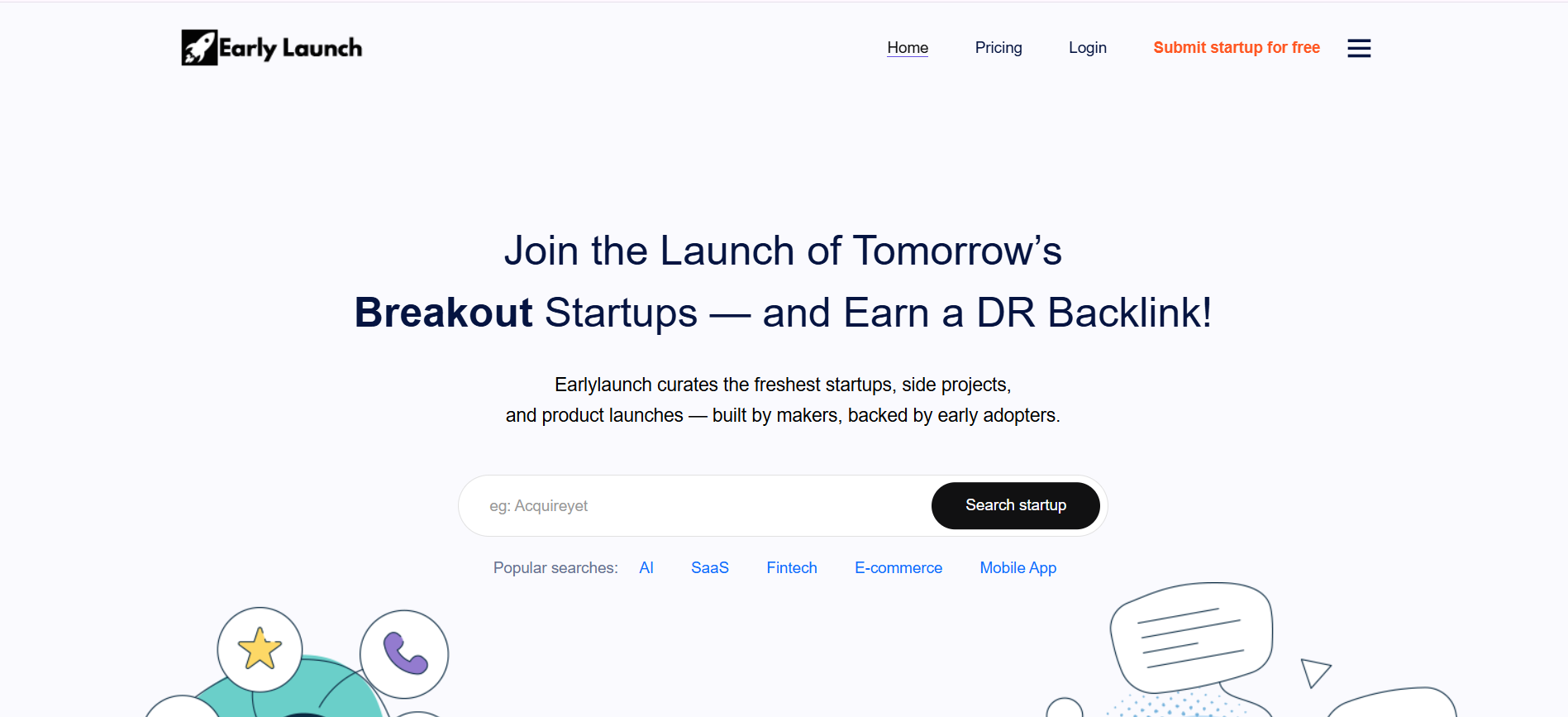
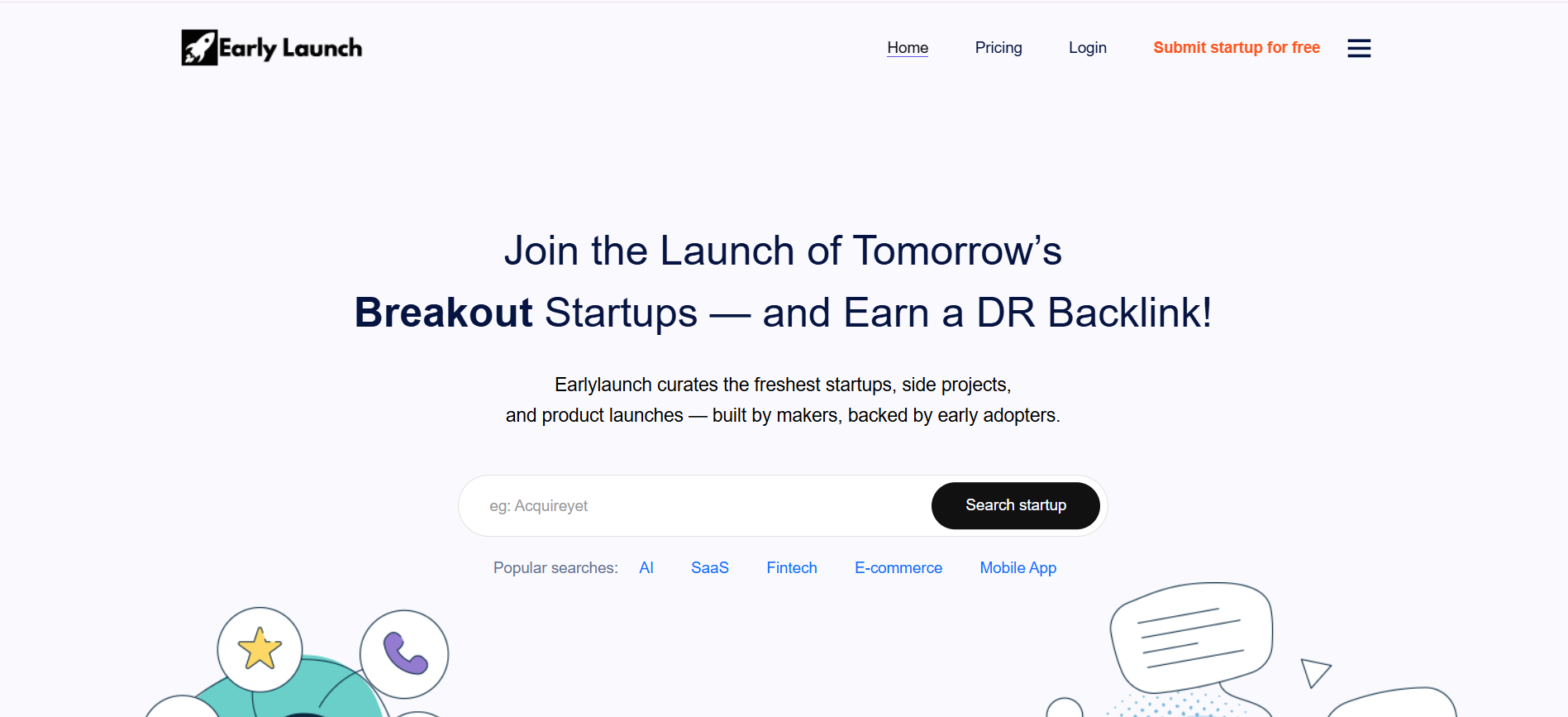
EarlyLaunch is a public-facing platform where founders can publish startups and products so early adopters, investors, and collaborators can discover them. The site presents itself as a curated startup directory with category browsing, featured launch slots, and optional paid promotion paths for founders who want faster visibility. Readers evaluating the service should treat marketing copy about traction and outcomes as claims to verify on the live site rather than independently confirmed facts.
Key Features
- Startup submission and listing - The public page invites founders to submit a startup, go through review, and appear in a browsable directory after approval.
- Category-based discovery - Visitors can explore new startups by category, with the homepage highlighting recent launches and editorial-style product picks.
- Free and paid launch tiers - Visible plan copy contrasts a no-cost submission path with one-time paid options that advertise faster verification and more exposure.
- Featured placement signals - Paid tiers mention homepage-style features, a "Recently Launched" section, and priority support compared with the free tier.
- Editorial and community framing - The site emphasizes storytelling, feedback from early users, and joining a community of makers rather than only posting a bare link.
- Promotion pricing page - A dedicated promotion pricing page describes flexible promotion options aimed at boosting visibility on the platform.
Use Cases
EarlyLaunch appears aimed at bootstrapped founders and early-stage teams who want a structured place to announce an MVP or side project without building their own launch landing page from scratch. The free tier copy suggests patience with a longer manual review window, which may suit founders who are not in a hurry and mainly want a durable listing after approval.
Founders who want quicker verification and stronger placement on the directory may look at the one-time paid plans described on the pricing surfaces. The site's language around "launch sooner," featured sections, and priority support suggests those plans are meant for teams that treat directory visibility as part of a short launch window rather than a slow-burn presence.
For readers browsing rather than submitting, the directory functions as a discovery feed of new tools and startups across categories such as AI, productivity, and creator-economy products. That makes it useful for spotting what others are shipping, though individual product blurbs on the homepage should be read as third-party listings, not endorsements by EarlyLaunch.
Pricing
The site highlights a $0 / forever style free option alongside a $14.99 / one-time paid tier on visible pricing blocks, with additional plan names such as Launch and Pro referenced in supporting copy. Free-tier bullets on the public page mention publishing after manual review, directory listing after approval, and a verification timeline described as up to 60+ days, with no homepage feature or priority exposure.
Paid-tier bullets advertise instant verification, immediate directory visibility, featured placement in "Recently Launched," and priority support. The promotion pricing page adds language about flexible promotion pricing to increase visibility. Exact plan names, limits, and refund terms should be confirmed on the live pricing pages before purchase, because homepage excerpts may not capture every condition.
User Experience and Support
The public site reads like a marketing and directory hybrid: founders see submission calls-to-action, plan comparisons, and social proof, while visitors get category navigation and launch highlights. Onboarding is described as simple, with manual review on the free path and faster verification on paid paths.
Support signals are tiered. Free listings appear to rely on standard review timelines, while Launch and Pro messaging mentions priority help for listing optimization and troubleshooting. Footer links expose Terms of Use and Privacy Policy, and the site lists social follow options on LinkedIn and X. There is no deep documentation portal visible in the fetched pages, so teams with complex compliance questions should use contact routes on the site to confirm process details.
Technical Details
EarlyLaunch presents as a web-based directory and launch showcase rather than a developer SDK or self-hosted product. Fetched pages emphasize HTML marketing content, category browsing, and pricing flows-not APIs, webhooks, or integration catalogs. Any technical implementation behind submissions is not described in the extracted evidence.
Founders should assume submissions are handled through the site's own forms and review workflow unless official docs state otherwise. If you need automated listing updates or CRM integration, verify whether such features exist before planning operations around them.
Pros and Cons
Pros
- Clear split between a free submission path and paid options for faster visibility, which helps founders match spend to urgency.
- Directory and category browsing give visitors a single place to scan many early-stage products.
- One-time fee framing on paid tiers may appeal to founders who dislike recurring directory subscriptions-confirm details on the pricing page.
- Featured launch sections and editorial picks can surface new products beyond a flat alphabetical list.
Cons
- Free-tier verification timelines described as 60+ days may be too slow for time-bound launches.
- Marketing claims such as thousands of startups launched should be treated as on-site statements, not independently verified metrics.
- Limited technical documentation in fetched pages makes it harder to evaluate automation or integration fit from the public site alone.
- Directory competition means placement and attention still depend on how crowded the category is when you launch.
FAQ
What is EarlyLaunch and what problem does it appear to solve?
EarlyLaunch presents itself as a startup and product directory where founders publish launches to gain visibility, feedback, and connections with early adopters and investors. The problem it targets is discovery at the earliest stage of a product's life, when a team has a story to tell but limited distribution channels.
Who is EarlyLaunch best suited for?
The visible copy emphasizes bootstrapped founders, early-stage ideas, and teams ready to scale who want a public listing and community exposure. It is likely less relevant for established enterprises that already have large distribution stacks, unless they want an additional launch touchpoint.
What can users clearly verify from the public site?
Users can verify submission and browse flows, category navigation, plan comparison bullets, and links to promotion pricing. They can also see examples of listed products and editorial "product of the day/week/month" style highlights on the homepage content that was fetched.
How does the free tier differ from paid launch options on EarlyLaunch?
The free path mentions manual review, listing after approval, and a long verification window without homepage feature or priority exposure. Paid tiers advertise instant verification, immediate visibility, featured "Recently Launched" placement, and priority support according to on-page plan bullets.
What should founders check before paying for a launch plan?
Confirm current prices, whether fees are truly one-time, what "featured" placement includes, refund or chargeback policies, and expected review times for your specific listing. Also verify whether backlink or SEO benefits match your expectations, since promotional headlines should be read carefully rather than assumed.
Does EarlyLaunch show support and policy information publicly?
Footer and resource links point to terms, privacy, and social channels. Deeper support appears tied to paid tiers in the marketing copy. Founders with legal or data-handling questions should read the policy pages and contact the team if the public material is not specific enough.
Conclusion
EarlyLaunch is positioned as a founder-facing launch directory with free and paid paths to get startups in front of an audience browsing new products. Teams should align plan choice with how quickly they need verification and featured placement, and double-check pricing and policies on the official site before submitting. For many early-stage founders, it may function as one discovery channel among several rather than a sole growth strategy.